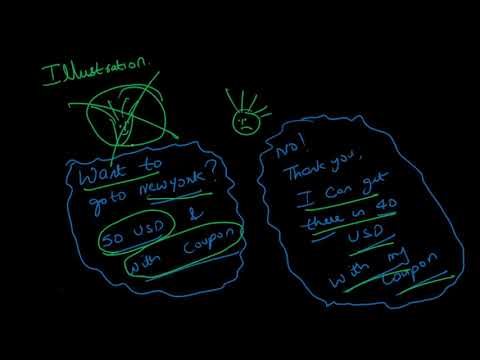
Another video on Dijkstra.
The next video will be on Dijkstra too. It will be much shorter. And you will be really comfortably with Dij by then!
Another video on Dijkstra.
The next video will be on Dijkstra too. It will be much shorter. And you will be really comfortably with Dij by then!
Hello dardev, thank you very much, for the work that you have done and put together a truely second to none playlist of graph theory please consider making one for dynamic programming as well
Thanks! One thing at a time.
I will finish graph series; then dynamic programming will be started. I have loads of good ideas for DP too (since its one of my stronger subjects)!
Subscribe to stay notified.
One more Dijkstras coming up this evening! Already done, but am releasing it in the evening! <3
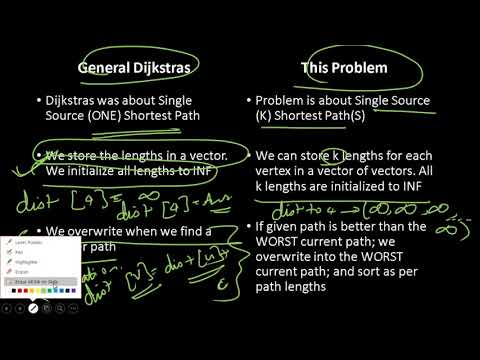
Uploaded Detection/Retrieval of Negative Cycle
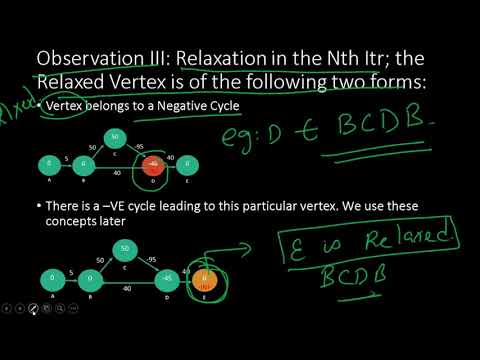
Digraph Cycle Retrieval
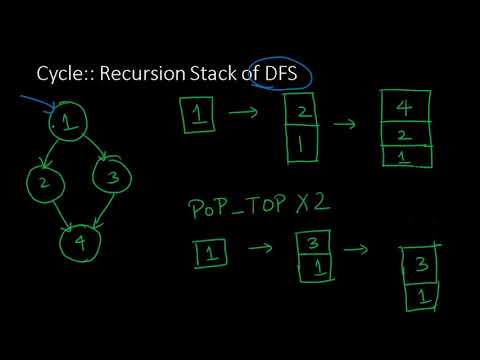
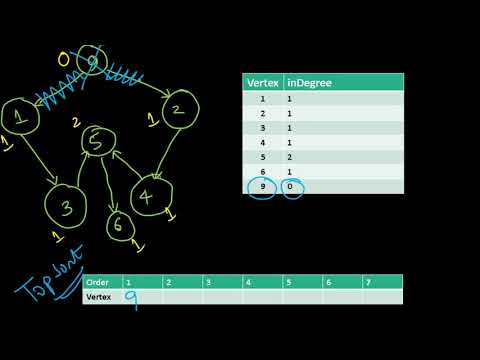
I am uploading Topological Sort theory now.
Reuploaded first 9 videos with better audio
Reuploaded first 12 videos for better audios. All videos have good audio now. Will continue the series.
Just uploaded Graph 17: Longest Flight Route :: Modified Dijkstras(CSES 16: 1680) - YouTube
I have also given a homework assignment this time. Go ahead and get active in comments!
Finished uploading ONE more Dijkstras and one more Topological Sort problem!
Although I completed all graph theory from CodeNCode , I saw some of your videos quite well explained , try to complete solve all question of CSES in graph category .
Offtopic : could you please make a video editorial of CodeChef: Practical coding for everyone and explain your solution
This problem is really good, will get you more views for sure from leetcode viewers!
It’s based on Dijkstras algo…
Thanks mate!
Thanks. Its fantastic. I have “already solved a similar problem” … this is very trivial. Let me just solve it.
I will make a video editorial later; but here is my code with explanation in comments at start. Does it make sense?
/*Binary Search*/
/*
1) Given a range L....R; consider a valid sequence l...r. such that l.....r+1 is invaid.
2) How many strings can be formed by this subsequence, that begin with l?
3) Ans is r-1+1
4) Now consider the larger sequence L... R. let us walk from L to IND
5) Such that for each of these chars, the longest valid string ENDS before R.
6) The contribution of all these are static and can be calculated from presums of step 3.
7) the portion from IND+1 to R, well these end with R. So we can use summation formula to get their contri
8) Statis sum is Sigma(R-(IND+1)+1) = (R-IND)(R-IND+1)/2
8) Final Ans is static+summation.
*/

#include <bits/stdc++.h>
#define int long long
#define kpr fastIO()
#define endl "\n"
using namespace std;

void fastIO()
{
    ios_base::sync_with_stdio(false);
    cin.tie(0); cout.tie(0);
}

void preproc(int Arr[], int maxLimits[], int n, int k)
{
    int cnt_0 = 0, cnt_1 = 0, i, ind = 1;
    for (i = 1; i < n; ++i)
    {
        if(Arr[i] == 1)
        {
           cnt_1++;
        }
        else
        {
            cnt_0++;
        }
        if(cnt_0 > k or cnt_1 > k)
        {
            while(cnt_0 > k or cnt_1 > k)
            {
                maxLimits[ind] = i-1;
                if(Arr[ind] == 1)
                {
                    cnt_1--;
                }
                else
                {
                    cnt_0--;
                }
                ind++;
            }
        }
    }

    for(ind; ind < n; ++ind)
    {
        maxLimits[ind] = n-1;
    }


}

void prefixSums(int maxLimits[], int psums[], int n)
{
    psums[1] = maxLimits[1] - 1 + 1; int temp;
    for (int i = 2; i < n; ++i)
    {
        temp = maxLimits[i] - i + 1;
        psums[i] = psums[i-1] + temp;
    }

}

void solve(int maxLimits[], int psums[], int k, int l, int r )
{
    int ans, summation;
    auto itr = upper_bound(maxLimits+l, maxLimits+r, r) - maxLimits;//starting index of first string that ends at loc greater than r
    int ind = itr - 1; //starting index of the last string that ends before r.
    ind = min(ind,r);
    ans = psums[ind] - psums[l-1];
    summation = (r-ind)*(r-ind+1)/2;
    cout << (ans+summation) << endl;
}


int32_t main()
{
    kpr; int t, n, k, q; cin >> t;
    while(t--)
    {
        cin >> n >> k >> q; ++n; int Arr[n], maxLimits[n]; char c;
        Arr[0] = 2;
        for (int i = 1; i < n; ++i)
        {
            cin >> c;
            if(c=='0')
                Arr[i] = 0;
            else
                Arr[i] = 1;
        }

        preproc(Arr, maxLimits, n, k);
        int psums[n] = {0}; int l, r;
        prefixSums(maxLimits, psums, n);
        for (int i = 0; i < q; ++i)
        {
            cin >> l >> r;
            solve(maxLimits, psums, k, l, r);
        }

    }
}
okay cool
Really grateful for direction and feedback.
Its easy to get lost … without viewer feedback.
Thanks @vai53 @ss